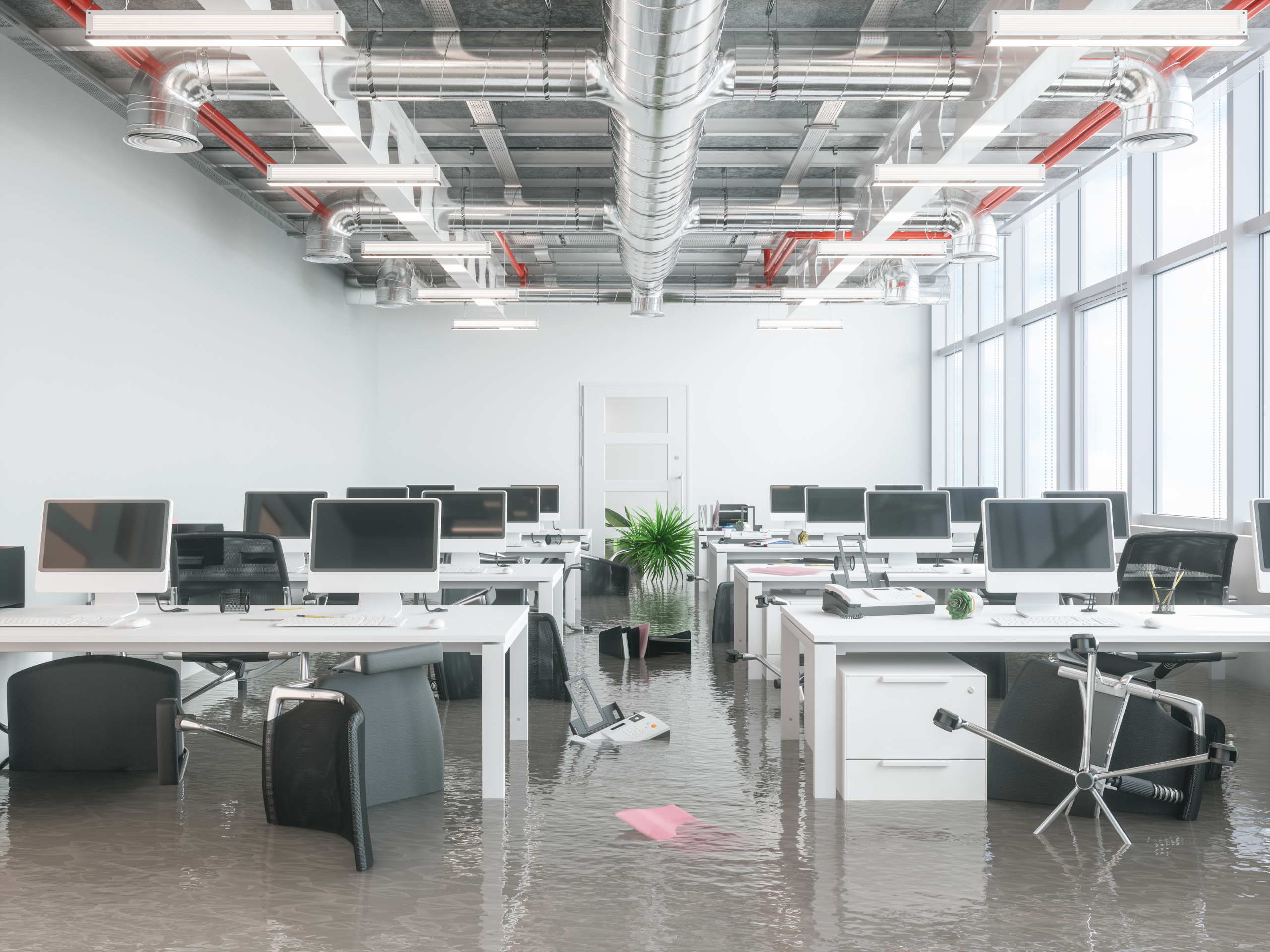
Water damage in office buildings can lead to costly repairs, business interruptions, and disputes over responsibility. When water damage occurs, it’s important to quickly determine who is liable so repairs can proceed without delay.
At Restoration and Recovery Contractors of America, we often work with landlords, tenants, and property managers navigating this complex issue. Here’s a clear breakdown of who’s typically responsible for water damage in office buildings and what steps to take.
Landlord Responsibilities
Generally, landlords are responsible for:
- Maintaining the building’s structure, including roofs, walls, and plumbing.
- Repairing leaks from common areas and building systems.
- Ensuring the building complies with health and safety codes.
If water damage results from structural failures or issues outside the tenant’s control, landlords usually cover repairs to the building.
Tenant Responsibilities
Tenants are typically responsible for:
- Maintaining the interior of their leased space.
- Repairing damage caused by tenant negligence (e.g., spills, clogged drains).
- Promptly reporting water issues to landlords.
Tenants should review their lease agreements carefully, as some leases specify additional responsibilities.
Role of Property Managers
Property managers act as intermediaries, coordinating inspections, repairs, and communications between landlords and tenants. They help ensure damage assessments are accurate and restoration work proceeds efficiently.
Insurance Considerations
Both landlords and tenants should have appropriate insurance coverage:
- Landlord’s insurance usually covers building structure damage.
- Tenant’s insurance covers personal property and business interruption losses.
Promptly notifying insurers and documenting damage is critical for smooth claims processing.
Steps to Take After Water Damage
- Report the damage immediately to property management or landlords.
- Document the damage with photos and detailed notes.
- Contact restoration professionals for a thorough assessment.
- Communicate with insurance providers to initiate claims.
- Coordinate repairs to minimize disruption and prevent further damage.
Final Thoughts
Water damage in office buildings can be complex, but clear communication and understanding responsibilities help speed up restoration and reduce conflicts.
At Restoration and Recovery Contractors of America, we provide expert water damage restoration services and guidance to landlords, tenants, and property managers alike.